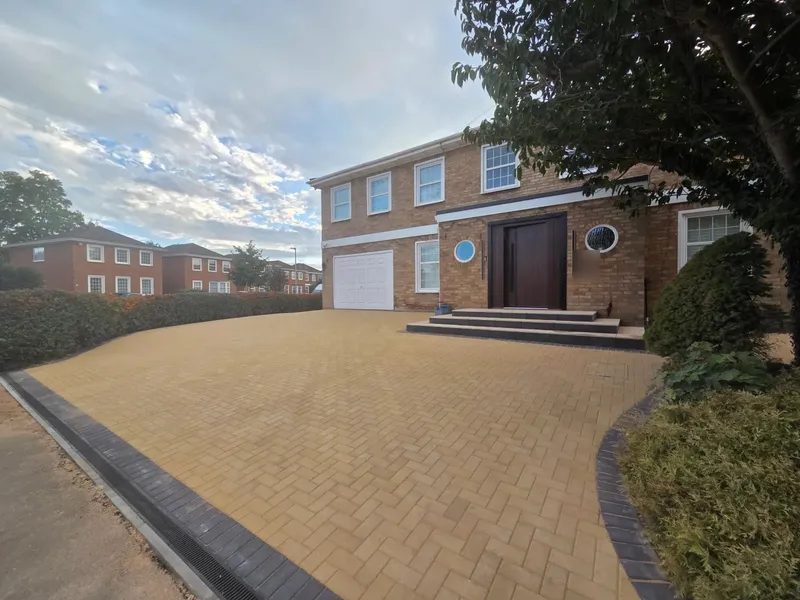
Block Paving Pros and Cons for Driveways
Block paving pros and cons for driveways: strength, repairs, patterns, planning rules, permeable options and upkeep, each with its source.
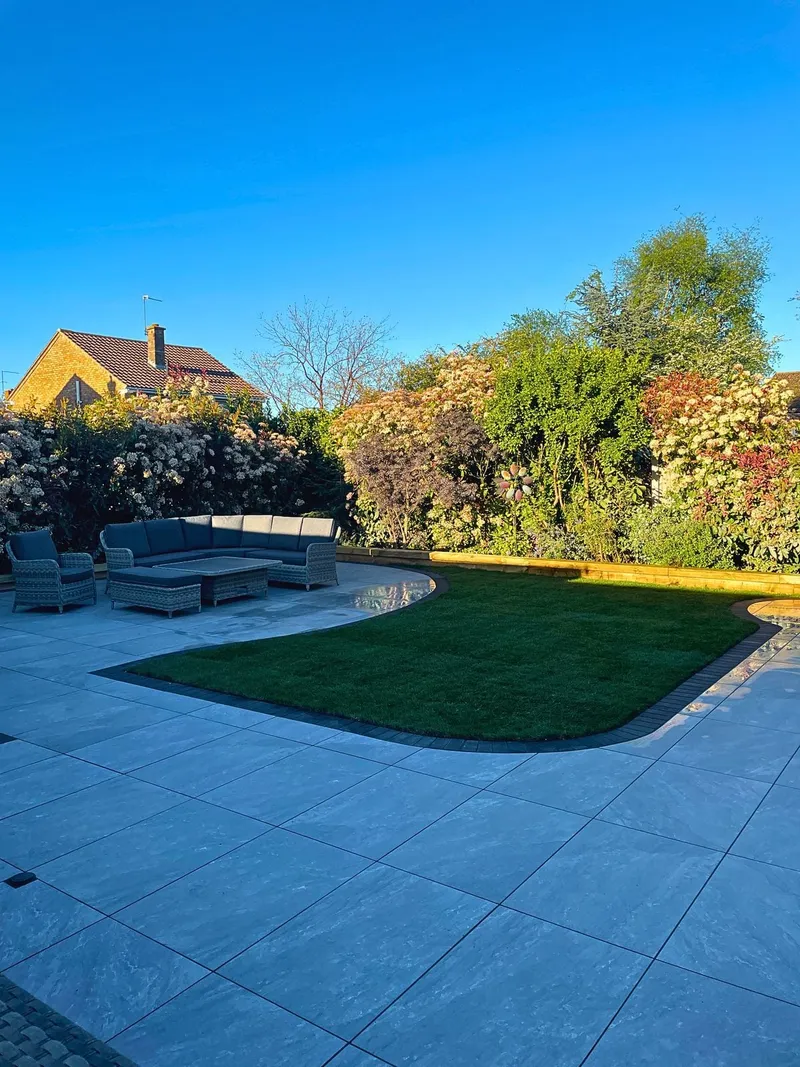
Sunken patio slabs, rocking slabs and cracks are signs that something under the paving has failed. This guide explains what each fault points to, what causes it and how to fix it for good.
Each fault points to a different layer under the paving, so read the pattern before lifting anything. The signs below narrow down where the problem sits.
A hollow sound on its own is not proof of poor work. Paving Expert, a long-running UK paving trade reference, notes that small voids can make large hollow sounds. Movement is the clearer test. A slab that moves or rocks underfoot is a fault.
Slabs set on dabs of mortar have voids beneath them. A loaded slab over a void can rock or break. This method is called spot bedding, or dot and dab.
Paving Expert says spot bedding is the prime cause in over 70% of the problem paving it inspects. It also says the voids make slabs more likely to fracture when loaded.
The British Standard for laying flags and slabs, BS 7533 Part 4, requires a full bedding layer. Paving Expert notes that this applies to patios as well as driveways.
Paving manufacturer Marshalls says porcelain must go on a full mortar bed and never on a five-spot bed. Its guide sets the bed at 30mm to 40mm thick.
Dense slabs also need a bond. Marshalls recommends a primer on the back of each slab to increase adhesion and prevent separation. Without one, porcelain can part from the mortar bed and work loose.
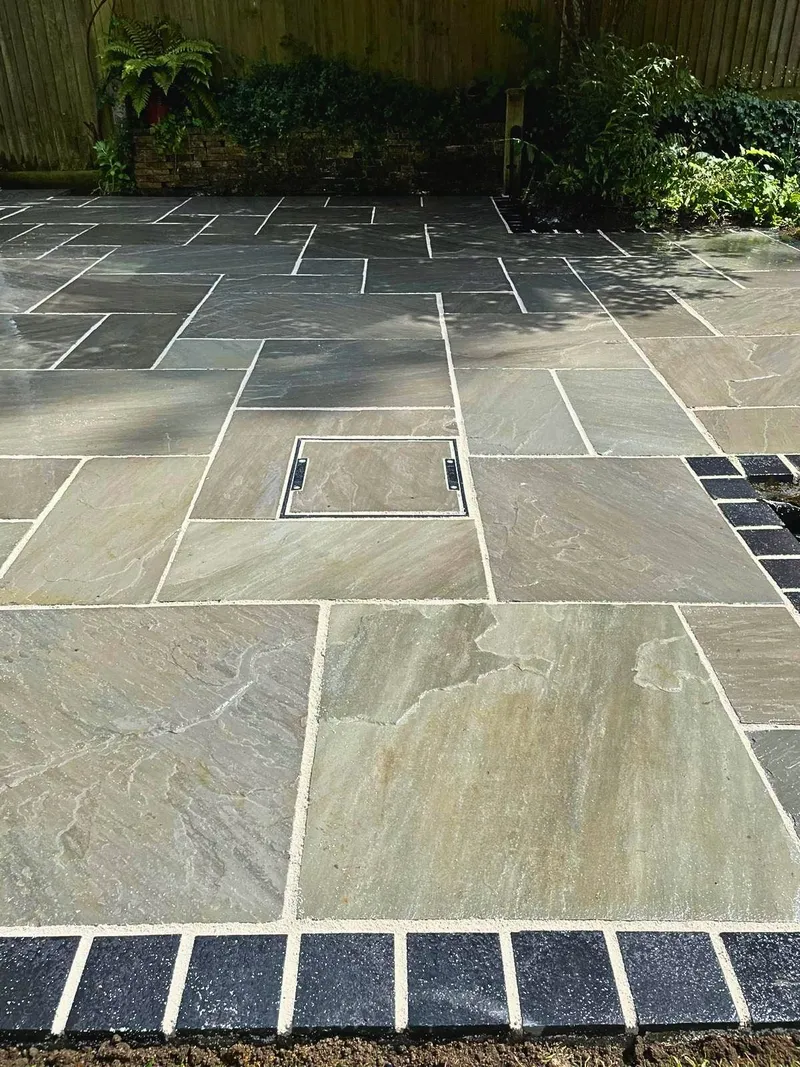
A group of sinking patio slabs points to the sub-base. This is the layer of crushed stone that carries the mortar bed and the slabs.
Marshalls' laying guides suggest a patio sub-base of at least 100mm for most homes. The right depth still depends on the ground and the loads it will carry.
The stone matters as much as the depth. Marshalls specifies well-graded Type 1, from 40mm down to dust. It warns that poorer material can fail under load and settle with frost or moisture.
Compaction is the other half. Each layer should be no more than 75mm thick and fully compacted before the next goes on.
Some garden patios are laid with no sub-base at all. Paving Expert says leaving it out is always a risk. A weak sub-base also causes ruts in block paving driveways.
Slabs laid over topsoil or soft ground sink as that ground settles. Paving Expert lists soft, boggy, made-up or deep topsoil as unreliable ground.
Topsoil is organic, so it breaks down over time and settles. A base laid on it sinks with it.
For this reason, Marshalls says sub-base material must not contain organic matter. Where the ground is in doubt, it recommends a geotextile membrane under the sub-base.
Water that cannot run off a patio soaks into the layers below it, so the falls matter. Good patio drainage starts with a gentle, even slope.
Paving Expert says a fall of about 1 in 60 suits most private patios. BS 7533 Part 4 sets minimums of 1 in 80 along the patio and 1 in 40 across it.
Marshalls gives the same minimum falls. It says they should be built into the sub-base, not made up in the mortar bed.
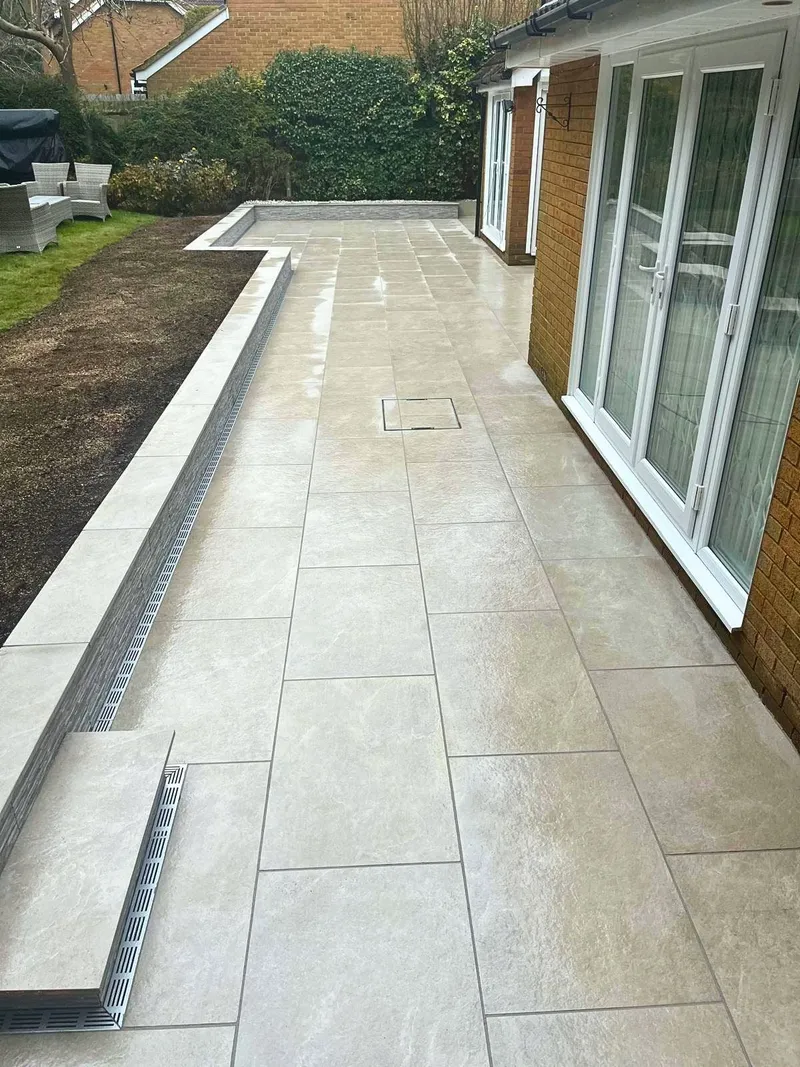
Ground movement can sink or lift slabs even on a sound base. Clay soil and tree roots both move the ground under paving.
The British Geological Survey explains that clay swells when wet and shrinks as it dries. It names dry, hot weather as a major factor in clay subsidence.
The BGS adds that the clays most prone to this lie mainly in the south-east of Britain.
The RHS says expanding roots can lift paving. Most lifting of drives and patios happens within 1m of a tree's trunk.
Roots can spread up to three times the height of the tree. The RHS warns that cutting large roots close to a tree may kill or destabilise it.
Check for a Tree Preservation Order before any work on a tree. In Berkshire, that means Wokingham Borough Council, Bracknell Forest Council or the Royal Borough of Windsor and Maidenhead.
Frost does most harm where the base is already weak. Marshalls warns that poor sub-base material can settle with frost or moisture.
Laying in the cold weakens the bed too. Marshalls says porcelain should not be laid below 5°C on a falling thermometer. The limit is 1°C on a rising one.
Its natural stone guide sets the falling limit at 3°C. Night-time temperatures count, and open work should be covered from rain and frost.
Sunken patio slabs are fixed from below. Lift them, put right the layer that failed and relay them on a full bed. Grout alone does not hold them.
Paving Expert treats any moving slab as a fault. Once a slab moves, the joints around it crack and are lost. Re-pointing rocking patio slabs leaves the void underneath.
Marshalls notes that colour varies between batches of paving. A new slab can look different from slabs that have weathered for years.
Pro Tip: Keep a few spare slabs from any new patio. Note the shade reference printed on the packs. Marshalls suggests this to help find matching slabs later.
A patio that stays level has the same layers every time, built to the manufacturer's guide. Check for these points in any written quote.
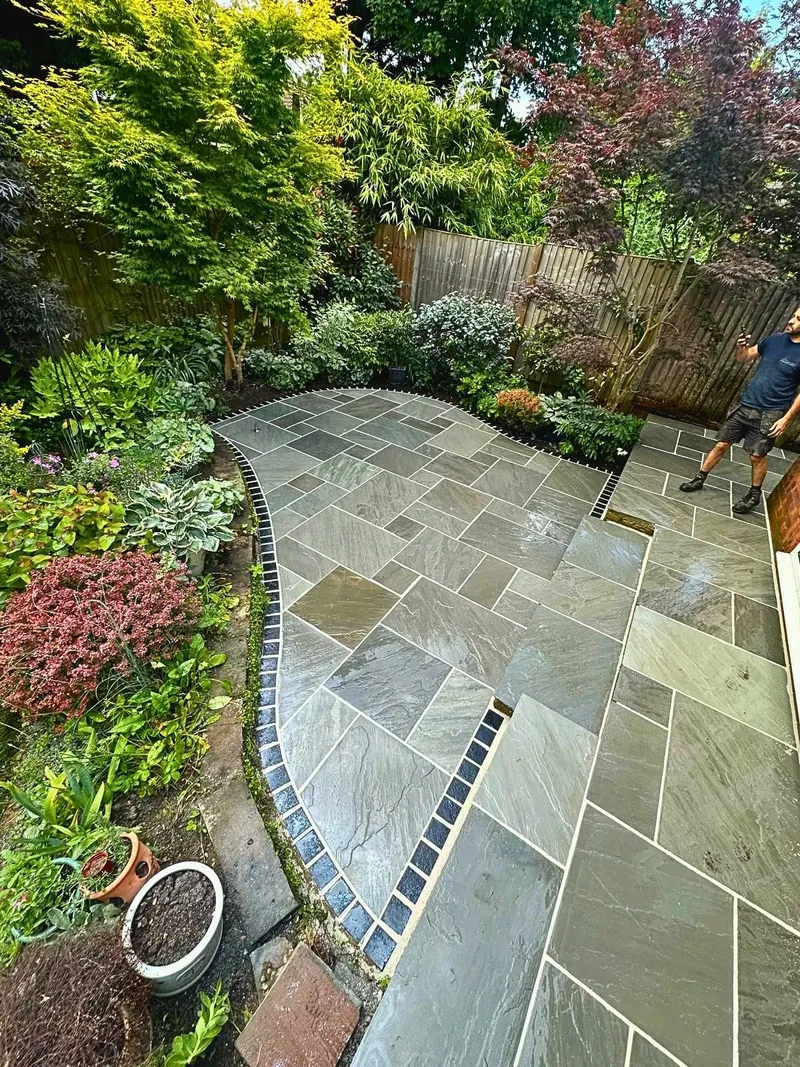
Sunken patio slabs, rocking slabs and cracks are symptoms of a problem below the surface. The cause is a part-filled bed, a weak base, poor falls or moving ground. The lasting fix for sunken patio slabs is to find that cause and rebuild the layer that failed. The slabs then go back down on a full mortar bed.
Re-pointing the joints alone leaves the cause in place.
Patio slabs sink when the layers below them settle. The usual causes are a thin or loose sub-base, soft ground under the base, or water that cannot drain. Clay soil and tree roots can also move the ground.
Yes, if the sub-base under it is sound. The slab is lifted and the old bed cleared. It then goes back on a primed, full mortar bed. If the base has failed, the area around it is rebuilt first.
Not always. A heavy impact or tree roots can crack a sound slab. Several cracked slabs in one area point to poor support, such as spot bedding or a failed sub-base.
Yes, within the temperature limits. Marshalls says porcelain should not be laid below 5°C on a falling thermometer. The limit on a rising one is 1°C. Laying stops if the weather could harm the finished paving.
Great job by Zak and his team. They replaced our tired concrete patio slabs with beautiful porcelain stones, now looking fabulous. Zak is supported by a great, hard-working team, who took great care throughout, were great to deal with, coped with difficult access and completed the whole job in four days. Recommended
Fantastic experience with Zak and team! In just 3 days they cleaned the area, laid down the porcelain tiles and cleaned up everything. Our patio is now ready for summer (see before and after pictures). Competitive quote and amazing job.
Warner installed a patio locally and I was impressed with the final job. As a result I contacted Warner's to do the same for me. The best decision I have made for a long time. The final job is very good, the two lads who fitted it absolutely marvellous. Clean, fast, obliging and did a great job in just a few, wet, days. I would certainly recommend them as aa preferred contractor.
Zak's team of Simon and Raf did a really excellent job of replacing my patio steps and thoroughly upgrading the whole area. The attention to detail was superb and I am delighted with the outcome. They were polite and considerate at all times.
We had our patio replaced and a new path added to our back garden, and a complete transformation of our front drive. Couldn't be any happier. The team worked so hard and non stop. Great group of guys who kept us informed and consulted at every stage Would recommend 100%.
Zak, Lewis and their team completed a great job putting in new patios in our back garden. We very much appreciated their hard work and attention to detail - nothing was too much trouble. Thanks guys !
We now have wonderful new Patio which was installed by Zak and his team 2 months ago. They did an excellent job and we are very happy with the end product. The service and attention to detail were great too, with prompt starts and good communication. Zacs team has now returned for the 6 week inspection to resolve any settlement/minor issue. I would definitely recommend Daniel Moquet
Zak and the team were fantastic throughout our garden renovation. From start to finish, Zak, Lewis and all the team were courteous, professional, punctual and hard working. Our garden renovation included repairing and building wooden decking, a raised patio, raised beds and a new pergola. We are really pleased with the end result, a fantastic transformation. The team come highly recommended after a great few weeks of work!
We had Zak replaced our patio couldn't fault there workmanship did a good job we would definitely use them again and would recommend them
I recently asked Zak and his team to do some hard landscape work at my parents in law in Wokingham. The guys replaced and extended an old patio area , put in new footpaths , dwarf walls end brick edging as well as a new single and turfed area in their back garden . My parents in law and me very pleased with the work they did and the job has created exactly the low maintenance areas we wanted. The finished job looks really great and would certainly use and recommend Zak and his team again .
Thank you to Zak and his team for doing a great job on building a retaining wall and laying our new patio. It looks fantastic. Zak was very professional and helpful and took pride in his work. We are very happy with the end result and would highly recommend them.
they have done a wonderful job on our new lawn, artificial and dog friendly, and sorted out some uneven patio slabs too making it much safer, very happy customer
Zak and his team replaced our very old patio with a new porcelain one, which we are extremely pleased with. The team were very professional and we would thoroughly recommend them.
Zak's team are fabulous. Great attention to detail and customer service ethos. Our new paving and entertainment area look great.
Highly Recommended – Fantastic Work We recently had our driveway completely renewed by Zak Warner and his team, transforming it from a gravel driveway into a beautifully finished brick driveway, together with extended parking areas, and a grand set of steps leading to our new doorway..... From start to finish, Zak and his team were excellent. Szymon and Dad were professional, highly skilled and incredibly hardworking throughout the project. What particularly impressed us was the way they kept us informed and consulted us at every stage, making sure we were happy with the work and any decisions before proceeding. Their attention to detail, talent in laying the bricks and quality of workmanship really showed in the finished result. The transformation has made a huge difference to the appearance and practicality of our property, and we are extremely pleased with the outcome. A genuinely professional and trustworthy team who clearly take pride in their work. We wouldn't hesitate to recommend Zak Warner and his team to anyone considering a new driveway or landscaping work. Shalini and Vinay, Maidenhead Berkshire.
So happy with our summer garden renovation completed by Zak and his team. The workmanship is second to none and the end result is better than we ever thought. From start to finish the attention to detail, communication and hard work was consistent, we would highly recommend Zak and Simon.
We have had our rear garden landscaped by Warner Landscape, We are so overwhelmed with the outcome its changed are lives to have such a lovely garden again after so many years. We have had other trades do work for us but Zak and his team are magnificent, One of his team is Simon who runs the project when Zak is on rout or getting other projects for his teams. Simon who never stops he works until all hours and the finished project is faultless nothing was to much trouble with the guys. We wish them well on all new projects and hope the customers will be as happy as we are. I have enclosed photos of the work.
I am delighted with the brilliant job Zak and his guys at Warner Landscapes did transforming my garden. From a flat plot of earth to a stunning garden which exceeded my expectations. I thoroughly recommend them.
Zak and his team are amazing. He went above and beyond to guide, advise and finish the project to the highest standard. It was finished on time even in the most challenging conditions. He was competitive in pricing and is very transparent with his estimate so you can see exactly what you are paying for. This is very reassuring, especially when comparing with other quotes we had. I would highly recommend Warner Landscaping and happy to provide feed back to anyone who would like it.
Zak and the team redesigned our garden back in July (yes July!). We’ve been so busy enjoying it, I forgot to write a review. We are so happy with it. The team were great, very hard working. Stuck to time and cost and I would highly recommend. In fact, Ild like you to come back and do our driveway 😉
Zak and his team were simply superb, they were always there super early, and finished late to ensure the job got done. They were really flexible with dates and always provided some alternatives to help keep the costs down, whilst ensuring the quality was top notch. I can honestly say, this was so easy for me as they made it that way. Fantastic company to use.
A very professional job done from start to finish. Adam and Matthew worked very hard in the heatwave. The results are better than we expected. Thanks 😊
I honestly can’t recommend this company enough. I met approx 6 landscapers during our project, all were hard workers, friendly and trustworthy. George in particular was absolutely fantastic, he kept us updated throughout and completed the work to a high standard. Zak also understood my vision straight away and I felt listened to which meant a lot as I did not feel this from a few other companies I got quotes from. Thanks again!
Great job from Zac and team. Path to stairs and future greenhouse at back of garden. Also base for greenhouse.the guys worked hard and did a fantastic job to put a path and base for greenhouse at back of garden.
Zac and the guys did an excellent job. Right from my first enquiry to the finish. They were very accommodating and came up with some excellent ideas during the construction of our garden path. I was concerned as our garden is not flat but they’ve levelled it out and produced a high end finish. I was most impressed with the way they connected the path to our garden room as it’s an awkward space and quite an incline but it’s now better than i could have imagined! Thank you.
Great job by Zak and his team on our garden refurbishment, starting with landscaping to provide bases for a log cabin and greenhouse together with raised beds and multi-level paved area. This was followed up with demolition and rebuilding our garage, a complex job as it is set into the ground as we are on the side of a hill. Finally they replaced the fence along one of our boundaries with a new close-boarded fence. All in all we are delighted with the result and would not hesitate to recommend them.
We recently had Zak and his team do our driveway. We opted for gravel grids and pea shingle. The team were fantastic. Turned up on time, worked hard and cleared up thoroughly at the end of each day. The prep work was outstanding and over the course of the job I had a variety of other tradesmen and surveyors in who all commented on a proper job being done and asking for their details. All my neighbours were really impressed with them too. I would highly recommend this company and will be using them again for my back garden project. Thank you so much Zak, Lewis & Raff for a fantastic job.
Zak and the guys at Daniel Moquet have been fantastic from start to finish! They worked hard and made every effort to finish each detail with a quality finish in mind. They were good communicating and reasonably priced even with added extras. I would highly recommend and I will be using them again for future projects!
5* Company. 5* Work. 5* Team. Great project management from Zak, thorough and efficient job completed, and the team were very conscientious making sure that everything was left clean and tidy at the end of each day. Standard of work is great and good to have a friendly team looking after everything – and drinking all the supplied tea, coffee and water! Attention to detail was superb and any requests or slight changes were accommodated without fuss. Will definitely use in the future and recommend you look no further for your project these are the boys to use!
We couldn’t have been happier with Zak, Lewis and the team. The completed all the work to a high standard on time and on budget- we wouldn’t hesitate to use them for future projects
I recently had my backyard landscaped by Daniel Moquet landscaping and I am absolutely thrilled with the results. The team was very professional, efficient and meticulous in their work. They took the time to understand my vision for the space and then executed perfectly. The finished product is beautiful and functional and I could not be happier. I would highly recommend them to anyone looking for excellent landscaping work. They are a true professional company that delivers on their promise. Thank you so much
Zak and his team have transformed my garden! I am very happy with the result and the team, led by Simon, onsite were great. Highly recommend the business.
From start to finish the experience with Zak and his team was excellent. They took care with protecting our property whilst doing the required work - including a long wheelbarrow run through our garage of several tons of materials. The whole team were polite and friendly and keen to please. I would definitely use them again if I have another project.
Just had some block work and fencing installed by Zak and team. They did a phenomenal job as there was a lot of pre work to do. We have some more work planned in the pipe line and they will definitely be my first call. They are very responsive, on time everyday and completed within the schedule.
Daniel Moquet Ascot undertook a small landscaping project to transform a 30 sq mt shaded area of lawn under trees (where grass had never grown despite many years of failed attempts) into an attractive place decorated with Mondo shade tolerant plants and traversed by a stepping stone path. We are very pleased with the results and the excellent friendly service and communication provided during the whole process from the initial quotation visit to the completion phase when everything was left neat and tidy. I would highly recommend Zak and his team.
Had a great service from Zak and all his team. From start to finish, they helped bring our vision to life. The team were courteous, reliable and completed the works on time and within budget. We would highly recommend.
Zac and his team worked so hard to create our vision. Beautiful job with excellent attention to detail and such a friendly approach. Highly recommend!
Great job, well priced and executed. Would definitely recommend!
Superfast and precise team! Zak and his team are very professional and fulfilled all the request. They did a fantastic job with very reasonably price!
Amazing work completely transformed my back garden , helpful and always on time . Would happily work with Zak and the team again
Technique is full of professional. Colleagues are full of positive n enthusiastic as well👍👍👍
We recently used this company for the installation of a new gate. whilst it wasn't a large job they work was carried out very professionally and on time. I would use them again.
Zak and his teams did a great job and were committed to ensuring we were happy with the finished result
The team lead by Zac completed a landscaping task at my house they were very efficient and I am very satisfied with the completed project.
Really great work ethic and team - thank you. Delivered project on time and on budget. So pleased with the results. Highly recommend.
really great company, they have transformed the front of my house
Quiet, tidy throughout, and a first class job done
Great bunch of guys and the blonde guy is 🤤
From first meeting Zac when he quoted for the works, not the cheapest but not the most expensive, I got a really good feeling about him, and so glad I did. His guys did a fantastic job and they were really nice too, respectful and tidied up after themselves everyday. I'm super happy with my garden and I've already asked Zac for a quote to do some more work 👍
Really pleased with the work on my garden and couldn’t be happier with how it’s turned out. We had to rearrange the original start date, but communication was great throughout and everything went exactly as expected. The team were brilliant – friendly, hardworking, always tidy and really considerate of my neighbours, which I appreciated. The finished garden is exactly what I wanted, and the quality of the work and attention to detail are excellent. It’s clear they take pride in what they do. Really happy with the whole experience and wouldn’t hesitate to recommend them. Thanks again for doing such a great job!
Block paving pros and cons for driveways: strength, repairs, patterns, planning rules, permeable options and upkeep, each with its source.
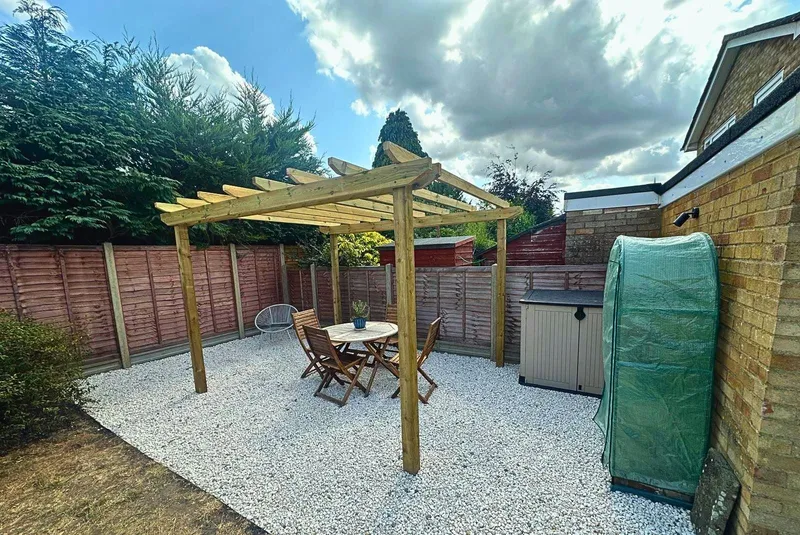
Ten small garden ideas in planning order: layout, surfaces, levels, climbers, trees, raised beds, screening and lighting, with the planning limits.
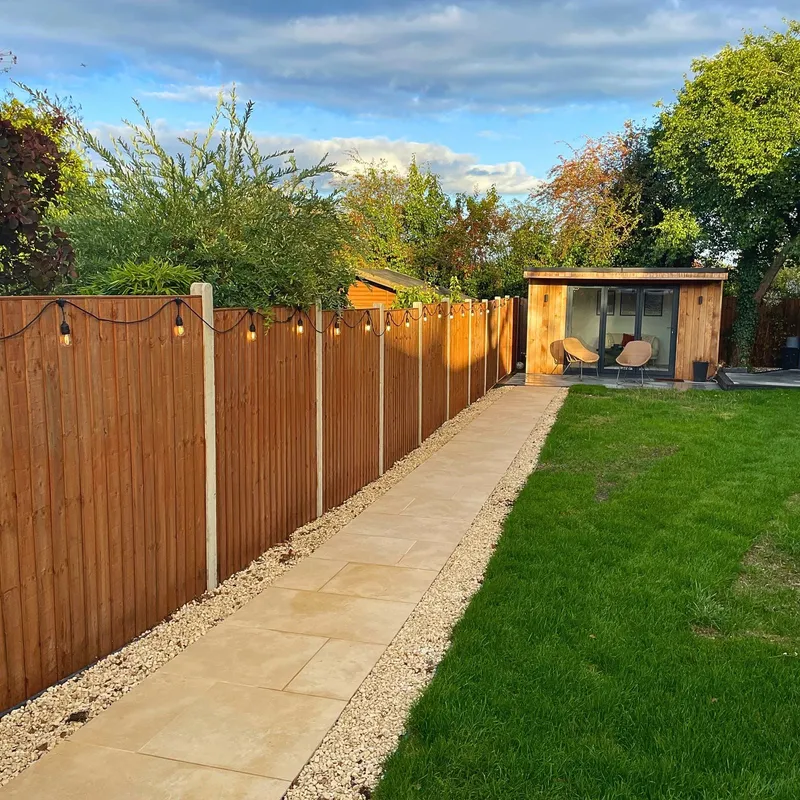
No law makes the left or right fence belong to a property. How title plans, deeds, T marks and boundary agreements show who owns a boundary fence.
We lay every patio on a compacted sub-base and a full mortar bed, and our work comes with a 5-year guarantee. Tell us a little about your garden and we'll get back to you within 24 hours to arrange a free visit and quote.
See our patios and paths and patios in Crowthorne pages.
Prefer to talk? Call us on 07462 187303 or email info@warnerlandscapes.co.uk.
Privacy Overview

This website uses cookies to give you the best experience. Some cookies are needed for the website to work, while others help us understand how visitors use the site and measure our adverts. You can turn the optional cookies on or off at any time using the options below. A small cookie is still stored to remember your choice. Read our Cookie Policy.
Necessary
These cookies are needed for the website to work. They keep core features running, such as page loading, security and remembering your cookie choice. They can't be turned off.
Analytics
Analytics cookies (Google Analytics) show us how visitors use the website, such as which pages are visited most and how people move around the site. They help us improve it. They stay off unless you turn them on.
Marketing
Marketing cookies are used to measure our adverts and show relevant ones. They may be set by Google Ads and Meta (Facebook and Instagram). They stay off unless you turn them on.